
Hello Everyone, want to know a little bit about Seagrass beds?
Well here you go!
Around 100 million years ago, grass from land adapted to live and reproduce while submerged in seawater—the modern-day seagrasses. This sea invasion by land plants happened four separate times, resulting in four unrelated families of 50-60 total seagrass species, which can be found on the coast of every continent except Antarctica. (Ocean Portal Team)
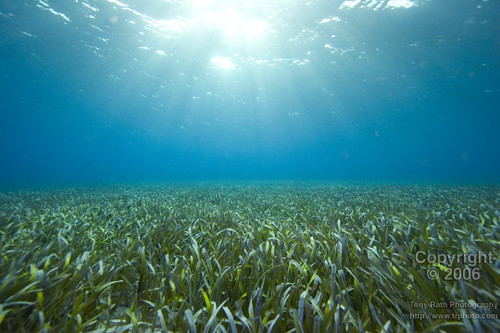
Seagrasses are just like any typical grass specie in the terrestrial environment. They get their energy from the sun, through the process of photosynthesis which allows for growth. In order for photosynthesis to occur, the seagrass must live in shallow waters that are easily touched by the sun’s rays. Just like terrestrial grass, sea grass spreads over a large area and into lush meadows. They are flowering plants and reproduce by pollination of flowers and the sending out of seeds.
 |

No comments:
Post a Comment