What are wetlands and its purpose in our environment?
Wetlands are a link between water and land. They are a part of the foundation of nations resources and are vital to health of the environment. Wetlands are called by many names like swamps, marshes and bogs. They mostly consist of trees, grasses, mangroves, shrubs and mosses. They vary widely on a few environmental factors such as the differences in soils, climate, topography, climate, vegetation and in how often water is there to saturate the vegetation, also known as the hydrology. They are mainly found alongside waterways such as lakes and oceans and flood plains. Wetlands serve many and import functions not only to the environment but to humans as well that also benefit from the environmental advantages. According to Defenders of Wildlife, wetlands are considered to be one of the most productive ecosystems in the world.
So what are the importance of wetlands? Well let me tell you.
Wetlands first and foremost are homes to many forms of life, they provide a habitat and protection for these wildlife. They also serve as a food source for aquatic life by releasing vegetative matter into rivers and oceans. Apart from providing food and homes for creatures they serve other important functions such as acting like sponges against flooding. They prevent flooding by absorbing water during stormy weather and keeping river levels normal. They also help to purify, filter out and store water. These ecosystems also serve recreational purposes by providing places of beauty for people to visit. Example Caroni Swamp and the Nariva Swamp both situated in the island of Trinidad.
You can check out these websites if you would like more information.
http://water.epa.gov/type/wetlands/index.cfm
http://www.defenders.org/wetlands/basic-facts
wonders of the sea

stop the destruction
Friday, 6 November 2015

Monday, 26 October 2015
Hey Folks!
Today I'm going to briefly talk about the importance of Seagrass beds.
Sea grass beds are home to many aquatic organisms. The tall leaves create a canopy and provide protection and shelter for small marine life.The leaves help small animals such as juvenile and small adult fish as well as many echinoderms, and molluscs which are starfish, clams, sea urchins etc. escape from larger predators. The dense network of roots also help these organisms against the strong currents.
Seagrass beds are also a very important feeding grounds for many aquatic life and they feed directly and indirectly on the leaves of the beds. Many organisms feed straight from the leaves while bigger organisms feed on small organisms that live in the seagrass areas. Detritus from the decomposition of the dead seagrass plants provides food for many seabed ridden creatures such as crabs, worms, and starfish just to name a few.
Seagrass beds also help to maintain a high water quality. They filter out nutrients from run-off before it can spread to other parts of the sea. Due to the tall flat leaves, they help to trap fine sediments that are suspended in the water, which increases the water clarity. If the seagrass area is destroyed this would reduce the clarity within the water as the sediments would be easily stirred up by wave action, which in turn would affect the animal behaviour and therefore the organisms would migrate out of the area.
Apart from the ecosystem support previously mentioned, seagrass beds provide protection for the coast. Areas that lack seagrass communities are proned to intense wave action from currents and storms. This in turn would lead to violent waves crashing onto the coastline resulting in coastal erosion. Just like terrestrial grass species, which prevent soil erosion, seagrass beds do the same and help to stabilize the sea floor due to its extensive root network. This helps to reduce the force of the currents along the bottom and to spread the waves resulting in a weaker force of the waves onto the coast, protecting and reducing the chances of coastal erosion.
Today I'm going to briefly talk about the importance of Seagrass beds.
Sea grass beds are home to many aquatic organisms. The tall leaves create a canopy and provide protection and shelter for small marine life.The leaves help small animals such as juvenile and small adult fish as well as many echinoderms, and molluscs which are starfish, clams, sea urchins etc. escape from larger predators. The dense network of roots also help these organisms against the strong currents.
Seagrass beds are also a very important feeding grounds for many aquatic life and they feed directly and indirectly on the leaves of the beds. Many organisms feed straight from the leaves while bigger organisms feed on small organisms that live in the seagrass areas. Detritus from the decomposition of the dead seagrass plants provides food for many seabed ridden creatures such as crabs, worms, and starfish just to name a few.
Seagrass beds also help to maintain a high water quality. They filter out nutrients from run-off before it can spread to other parts of the sea. Due to the tall flat leaves, they help to trap fine sediments that are suspended in the water, which increases the water clarity. If the seagrass area is destroyed this would reduce the clarity within the water as the sediments would be easily stirred up by wave action, which in turn would affect the animal behaviour and therefore the organisms would migrate out of the area.
Apart from the ecosystem support previously mentioned, seagrass beds provide protection for the coast. Areas that lack seagrass communities are proned to intense wave action from currents and storms. This in turn would lead to violent waves crashing onto the coastline resulting in coastal erosion. Just like terrestrial grass species, which prevent soil erosion, seagrass beds do the same and help to stabilize the sea floor due to its extensive root network. This helps to reduce the force of the currents along the bottom and to spread the waves resulting in a weaker force of the waves onto the coast, protecting and reducing the chances of coastal erosion.
Thursday, 22 October 2015
Hello Everyone, want to know a little bit about Seagrass beds?
Well here you go!
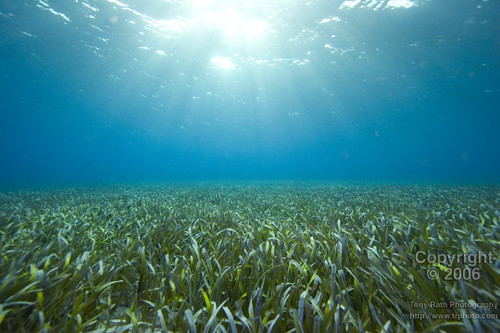
Around 100 million years ago, grass from land adapted to live and reproduce while submerged in seawater—the modern-day seagrasses. This sea invasion by land plants happened four separate times, resulting in four unrelated families of 50-60 total seagrass species, which can be found on the coast of every continent except Antarctica. (Ocean Portal Team)
Seagrasses are just like any typical grass specie in the terrestrial environment. They get their energy from the sun, through the process of photosynthesis which allows for growth. In order for photosynthesis to occur, the seagrass must live in shallow waters that are easily touched by the sun’s rays. Just like terrestrial grass, sea grass spreads over a large area and into lush meadows. They are flowering plants and reproduce by pollination of flowers and the sending out of seeds.
 |
Monday, 19 October 2015

Hey guys, today I am going to talk about the importance of coral reefs and why coastal development should not be allowed. Apart from the aesthetic beauty of the reefs, they serve many important functions in the environment. They are not just there to look nice. Coral reefs are important for many different reasons aside from containing the most diverse ecosystems on the planet. These spectacular biomes provide many functions for the marine life. They are homes to many aquatic life and provides shelter and protection for many marine organisms, they also produce a source of nitrogen and other essential nutrients for marine food chains and help with nutrient recycling. Apart from serving those purposes for marine life these reefs protect the coastlines from the damaging effects of wave action and storms. If these reefs are destroyed for coastal development it can have many negative effects such as coastal erosion and loss of biodiversity. This can then cause other rippling effects such as shortage of fish for food amongst others.
Many people do not realise the major effects that comes with the destruction of coral reefs and they tend to not pay attention to the environmental impacts, but it does not only affect the environment, us, as humans can also be greatly affected by such actions. There must be other options for developers than to destroy these reefs.
Many people do not realise the major effects that comes with the destruction of coral reefs and they tend to not pay attention to the environmental impacts, but it does not only affect the environment, us, as humans can also be greatly affected by such actions. There must be other options for developers than to destroy these reefs.
Thursday, 8 October 2015
Rainforests of the ocean
The coral community is a system that includes a collection of biological communities, representing one of the most diverse ecosystems in the world. For this reason, coral reefs often are referred to as the "rainforests of the oceans." (EPA United States Environmental Protection Agency)
Coral reefs are extremely beautiful in nature and are homes to many aquatic life. They are diverse underwater ecosystems held together by calcium carbonate structures secreted by corals.
Coral reefs are extremely beautiful in nature and are homes to many aquatic life. They are diverse underwater ecosystems held together by calcium carbonate structures secreted by corals.
Friday, 2 October 2015
My name is Gabrielle Pasea, I was a student of Providence Girls Catholic School for 7 years where I studied environmental science, biology and physics for A levels. Environmental science however won over my heart. Since then I've had a great appreciation for the environment and all it's wonderful components. After taking a year off of school, my love for sciences never left and lead me to do my degree in Environmental Science and Sustainable Technology, at the University Of The West Indies. With this degree I hope to achieve great things and hopefully solve the many problems facing the world today and to be apart of finding new ways to preserve our environment so that many generations can enjoy.
Subscribe to:
Comments (Atom)